

Even small gardens can support a surprising number of nesting birds during spring, according to the British Trust for Ornithology (BTO), with May marking the busiest period for many species.
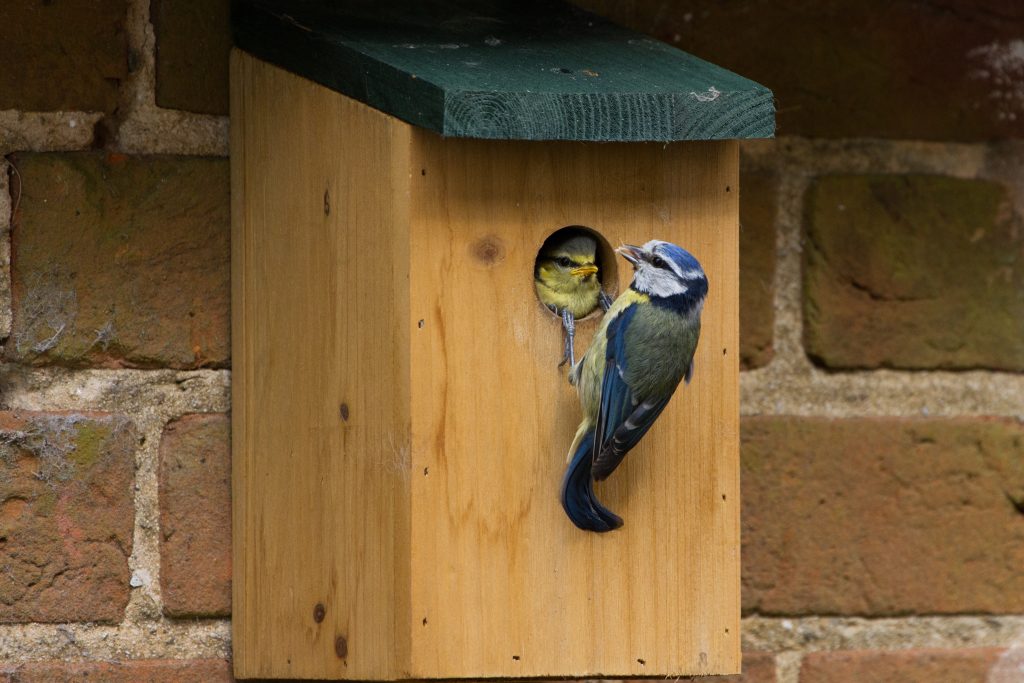
Blue Tit feeding chick at nest box entrance
Woodpigeons and Collared Doves may nest in trees, while Robins and Blackbirds often favour shrubbery. House Sparrows, Starlings and Swifts can also regularly be found nesting in the eaves of buildings.
For Blue Tits and Great Tits, however, May is the peak breeding season, with many birds now raising chicks inside garden nest boxes.
Blue Tits carefully time the arrival of their young to coincide with the spring abundance of caterpillars, ensuring there is enough food available for their large broods. Clutches commonly contain around ten eggs or chicks, although nests with as many as sixteen eggs have been recorded.
Unlike Blackbirds and Robins, which may attempt several broods throughout the year, Blue Tits and Great Tits generally breed only once each season.
In the wild, tits naturally nest inside holes in mature trees, but the BTO says garden nest boxes provide an important alternative habitat, particularly in areas with fewer older trees. They also offer people the chance to safely observe nesting behaviour more closely.
Residents monitoring nest boxes — either through video feeds or by carefully lifting lids for brief checks — are being encouraged to contribute to the BTO’s Nesting Neighbours survey.
By recording details such as the number of eggs laid and whether nests successfully fledge young, participants help researchers build a clearer picture of how breeding garden birds are faring each year.
The BTO stresses that brief visits to nests are unlikely to disturb birds significantly, especially in gardens where birds are already used to human activity, provided the surrounding habitat is not altered.
Those interested in learning more about nesting birds and how to behave responsibly around nests can read the BTO’s Code of Conduct through the Nesting Neighbours webpage.
Find out more about the survey at: www.bto.org/nesting-neighbours