
Robins are a familiar sight in gardens all year round, not just at Christmas, writes Rob Jaques from the British Trust for Ornithology.
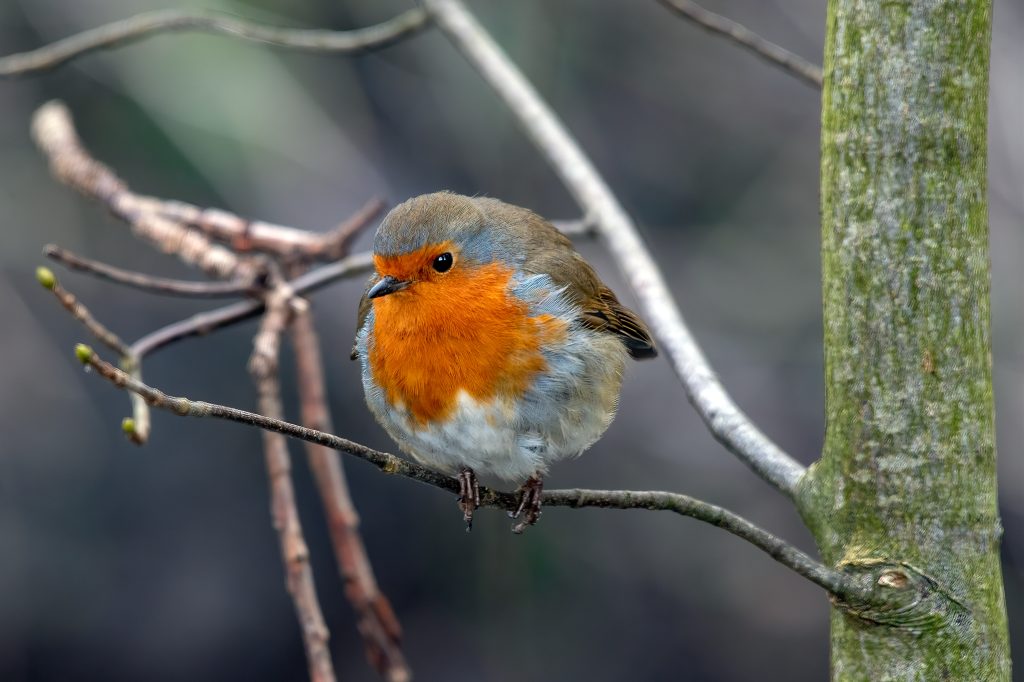
We have a long-held association between robins and Christmas, due to the robin’s red breast matching the uniforms of old-fashioned posties. This has led to the misconception that robins are only around for December, like some kind of avian bauble. This couldn’t be further from the truth, as robins are found throughout the year, though they are often more evident in the winter. It is harder to find food in the colder months, so robins will spend more time around feeders, and sometimes will approach gardeners in an attempt to take an unearthed worm. January is in fact a great time to listen out for these birds, as they become particularly vocal once the days start to become a bit longer.
Fortunately, robins are one of our birds which continue to fare well. The British Trust for Ornithology’s Garden BirdWatch survey shows that in the winter months, 92% of gardens report robins, a figure which is largely the same now as it was in 1995. This figure drops to around 70% in late summer, when birds become less obvious as the breeding season finishes and they start moulting.
While robins are present in the UK throughout the entire year, that doesn’t mean they never move. Birds from northern Europe come to the UK to escape harsher climates further north, bolstering our numbers in winter. Some UK breeding birds also head further south in the winter, but not all: many of our males will stay behind to hold territories, while females will travel elsewhere. This canny strategy means the limited food supplies found in the colder months only need to feed one bird rather than two. We know about these movements thanks to ringed birds; for example, individual robins ringed in Britain have appeared as far south as Morocco and Algeria.
The territoriality of robins is famed. You may have seen footage of robins battering a model bird with a red breast placed within its territory. However, this behaviour isn’t all that simple. While robins in the breeding season can be very aggressive to one another (normally an interloper will be forced out before it comes to blows), they can be tolerant of other robins, especially during the winter months, when they will put up with each other to access a valuable food source. That doesn’t mean you won’t see the occasional dust-up by your bird feeders, though!
Rob Jaques, BTO