

As summer’s drought takes its toll, Maggie Baldwin finds late colour and visiting moths among the salvias – and shares the jobs that will prepare our gardens for autumn, winter and the promise of spring.
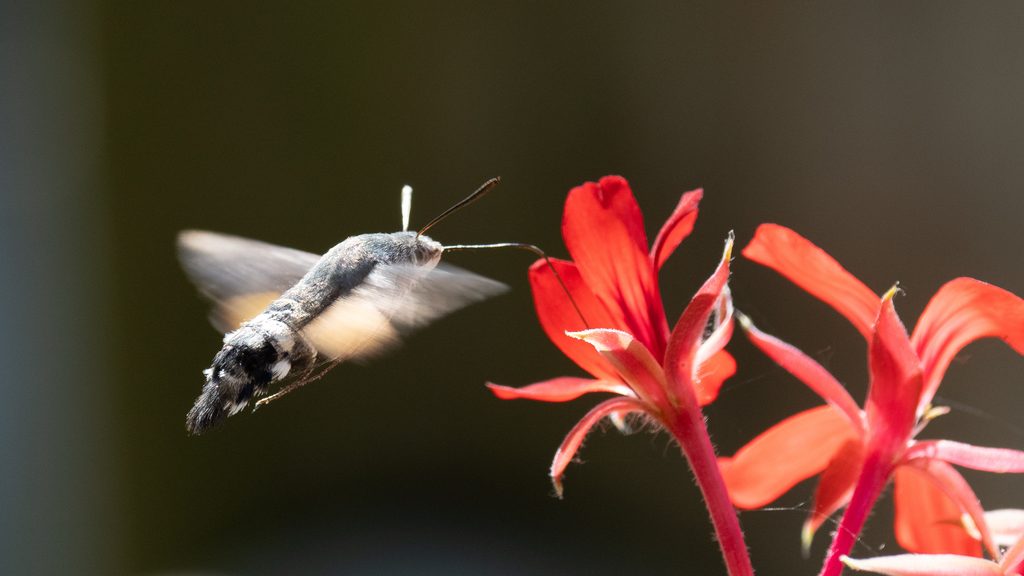
Hummingbird hawk-moths have thrived this year due to the hot temperatures
At the time of writing, we have had no noticeable rain for weeks and my garden is looking very sad.
Salvias are still making a super show, while the busy Lizzies, petunias and pelargoniums in pots are looking okay. I’m saving every drop of water for them, as my water butts have long since run dry.
One interesting visitor has been the hummingbird hawk-moth. They have been very prolific here this summer and have been enjoying the salvia flowers in my garden.
One evening recently, a single plant had four of the moths feeding from it at the same time!
The various floral displays around the town look lovely, and the Town Council team and volunteers are looking forward to the results later this month.
It’s time to gather the last crops and, sadly, begin preparing for winter as the light evenings start to disappear.
Plant garlic and autumn shallots while the soil is still warm. Winter salads can also be sown now, either in a sheltered spot outdoors or in a greenhouse or cold frame.
Reducing shade in the greenhouse can help the last tomatoes and peppers ripen.
Later this month, harvest squashes and pumpkins once their skins have hardened. Leave them in a greenhouse or porch for seven to ten days to cure, and they should store well for winter use.
Continue to deadhead dahlias, roses and penstemons to keep the displays going into autumn.
If we receive some long-awaited rain, spring-flowering bulbs can be planted. Planting them at three times the depth of the bulb helps their roots reach well into the soil.
It’s lovely to anticipate a colourful show of daffodils and narcissi next spring.
Enjoy your gardening!
Maggie Baldwin