

Pollinators like bees play a vital role in our ecosystems by fertilising plants and ensuring the growth of fruits, vegetables, and flowers.
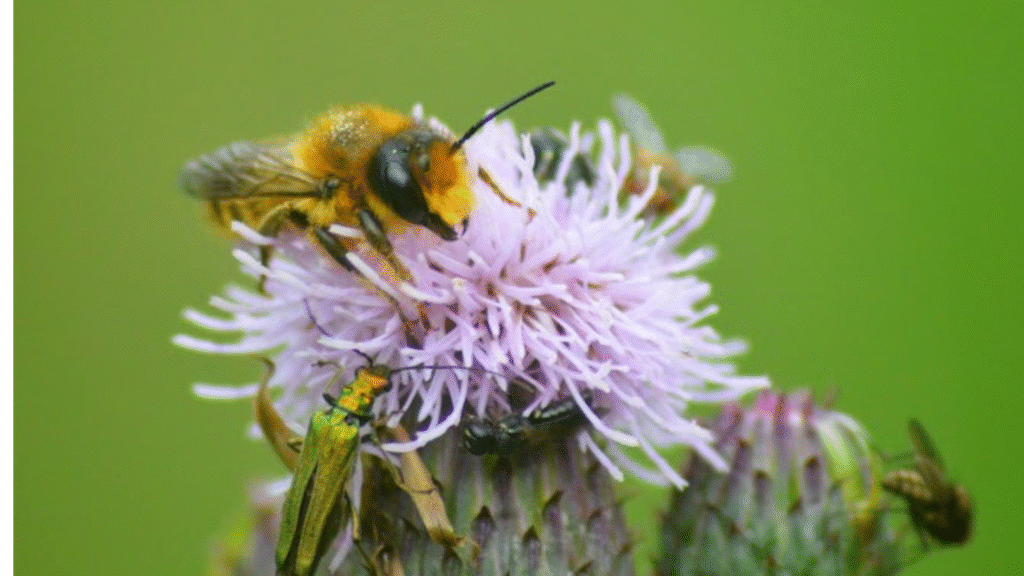
While honeybees often steal the spotlight, solitary bees are just as important, if not more so. Unlike social bees, such as honeybees and bumblebees, solitary bees work alone. They nest in small burrows or holes and are incredibly efficient pollinators.
Recently, a volunteer group of BTO staff created a ‘bee bank’ within the Nunnery grounds. This simple sandy mound is specially designed to support solitary bees, giving them a place to burrow, nest, and thrive. Spaces like these can make a big difference, and they’re easy to recreate in your own garden.
By leaving a patch of bare earth, drilling holes into untreated wood, or setting up bee hotels, you can create a home for solitary bees. Avoiding pesticides and planting pollinator-friendly flowers like lavender, foxgloves and marjoram can also help boost populations.
Creating habitat is only part of the picture – we also need to monitor how pollinators are doing.
The Pollinator Monitoring Scheme (PoMS), supported by BTO, is part of a national effort tracking biodiversity. Anyone can take part by doing a simple 10-minute ‘Flower-Insect Timed (FIT)’ count while out walking and uploading results online.
By creating habitats and helping track pollinator numbers, we can all help bees thrive and protect the natural systems that support us all.
For more information or to get involved visit: www.ukpoms.org.uk
Jenny Donelan

Promoted content – Please mention the About Thetford website when responding to advertisements


